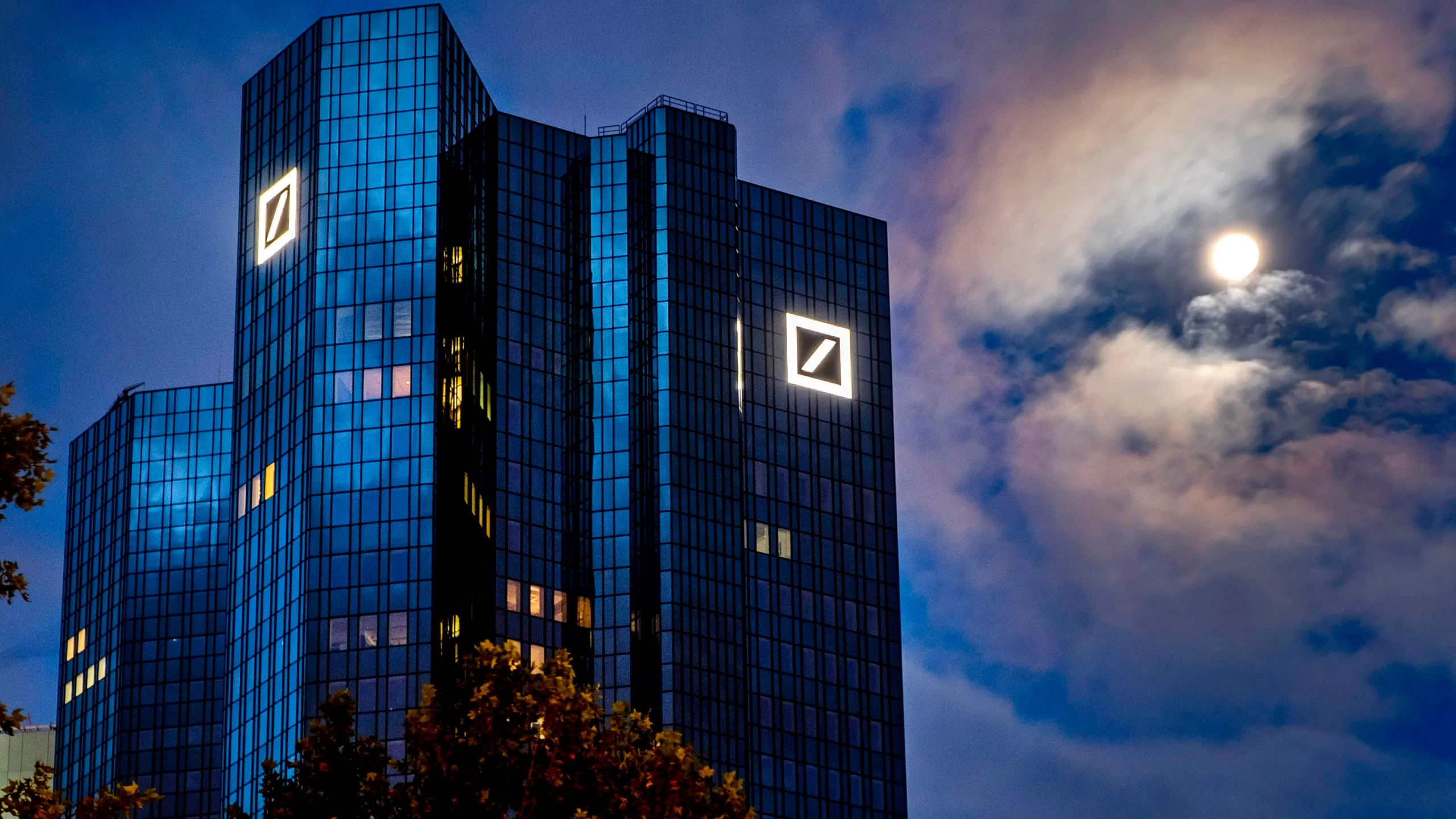
Deutsche Bank has warned that the AI funding gap could derail the current boom. The bank says projected revenues will fall short of the investment needed to sustain growth. Its research highlights an $800bn shortfall between expected AI earnings and the cost of GPUs, data centres, and power systems.
George Saravelos, Head of FX Research at Deutsche Bank, argues that AI-driven investment is currently keeping the US economy afloat. He told clients that “AI machines – in quite a literal sense – appear to be saving the US economy right now.” Without tech-related spending, he believes the US would already be close to recession.
Bain & Company calls the challenge a “math problem.” The consulting firm estimates that meeting future AI demand will require $2tn in annual revenue by 2030. Even after including AI-driven cost savings, the world remains $800bn short. Nvidia’s recent $100bn investment in OpenAI highlights the enormous sums now flowing into AI infrastructure.
Deutsche Bank stresses that GDP gains today come not from AI applications but from building infrastructure. Firms are spending billions on data centres, advanced chips, and power systems. Saravelos notes that “growth is not coming from AI itself but from building the factories to generate AI capacity.” He warns that such parabolic capital spending cannot last indefinitely.
This surge in AI investment has also distorted markets. Jim Reid, Deutsche Bank’s Head of Macro and Thematic Research, points out that the S&P 500’s rise this year comes mainly from the “Magnificent 7” – Apple, Microsoft, Alphabet, Amazon, Meta, Tesla, and Nvidia. While these giants drive gains, the other 493 companies in the index have seen far smaller returns. Torsten Sløk, Chief Economist at Apollo Global Management, adds that all upward earnings revisions to 2026 come from those same seven firms, while the rest of the index remains flat.
Goldman Sachs takes a more optimistic view. Analysts led by Manuel Abecasis forecast that AI will lift US GDP by 0.4% per year in the near term and 1.5% over the long run. They argue that once adoption spreads, AI will let workers and firms produce more output with the same resources, boosting productivity.
Still, questions remain about the sustainability of current spending. Goldman Sachs estimates that AI capital expenditure reached $368bn through August, led by Amazon Web Services, Microsoft Azure, and Google Cloud. Deutsche Bank warns that growth cannot rely on such extraordinary investment forever. Saravelos even suggests Nvidia has become central to US economic performance, describing the company as carrying the weight of growth through its supply of GPUs.
Bain & Company’s conclusion remains stark. “Two trillion dollars in annual revenue is what’s needed to fund computing power by 2030,” its report says. “However, even with AI-related savings, the world is still $800bn short.”
The debate shows a key tension. AI investment is driving growth and markets now, but the looming AI funding gap threatens long-term sustainability. Whether firms can close this gap will decide if the AI revolution endures as a driver of productivity or stalls under the weight of its own costs.
READ: US, UAE Interest Rate Cuts: Impact on Your Savings and Loans