Bank Indonesia raises borrowing costs for the first time in months as global instability and Middle East tensions pressure financial markets.
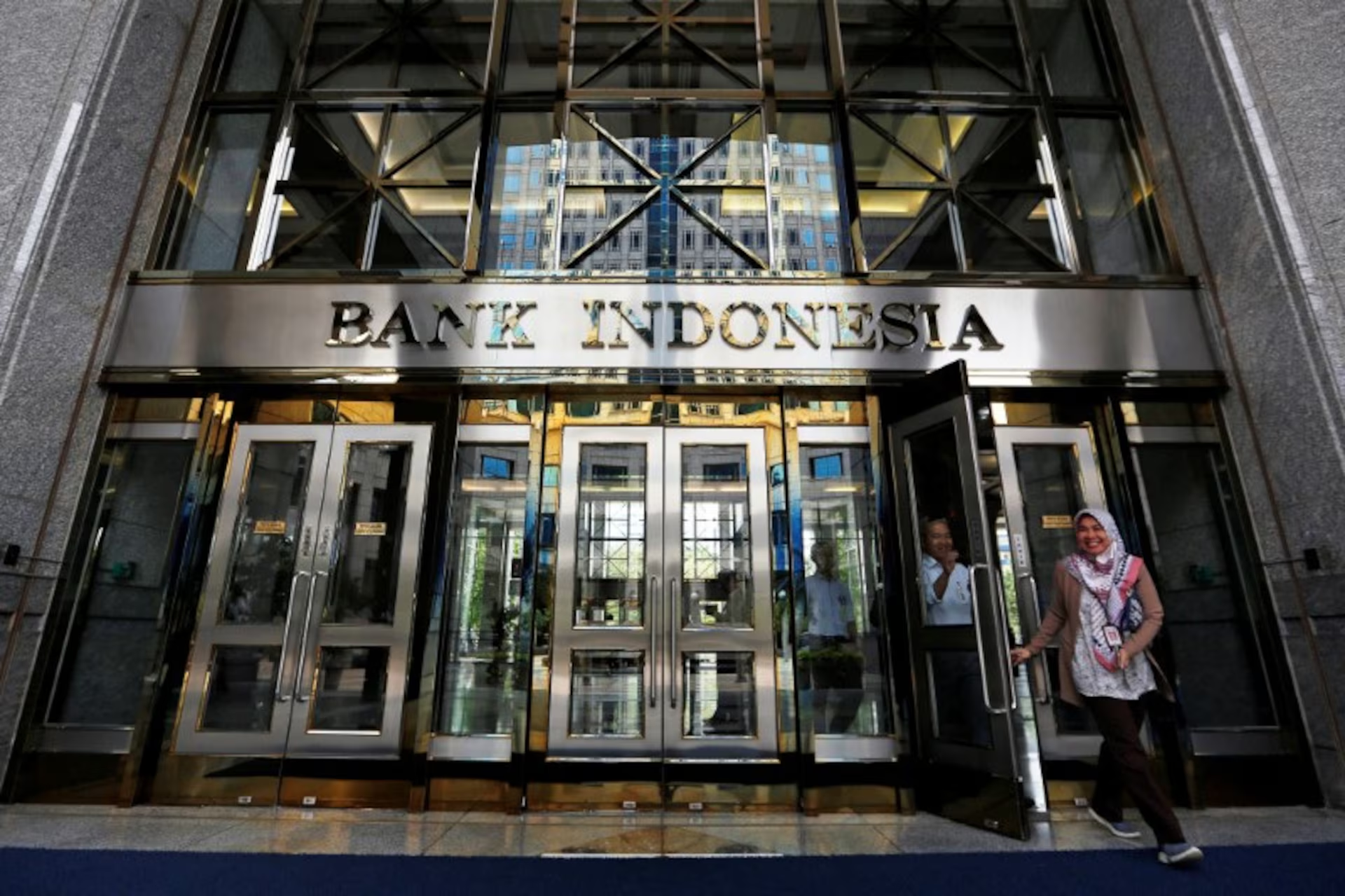
Bank Indonesia unexpectedly raised its benchmark interest rate on Wednesday, ending months of steady policy as officials moved to protect the Indonesian rupiah from growing global economic uncertainty.
The Indonesia interest rate was increased by 50 basis points, bringing the BI-Rate to 5.25 percent after eight consecutive months without changes, according to reports published by News.Az citing Xinhua.
The surprise move came after a two-day Board of Governors meeting held between May 19 and May 20.
In a statement, Bank Indonesia said the decision was aimed at maintaining the stability of the rupiah as global financial conditions worsen amid escalating tensions in the Middle East. Officials also said the increase was designed to keep inflation within the country’s target range for 2026 and 2027.
The decision caught parts of the market off guard.
Ahead of the announcement, analysts remained divided over whether the central bank would act aggressively or maintain its previous stance. A survey by CNBC Indonesia involving 15 financial institutions showed that most expected only a modest 25-basis-point increase, while others predicted rates would remain unchanged.
The larger-than-expected adjustment signals growing concern among policymakers over external economic pressures and currency volatility.
The Indonesia interest rate decision also reflects broader challenges facing emerging markets as geopolitical instability, rising energy costs, and global inflation continue to weigh on economies around the world.
Central banks across Asia have increasingly been forced to balance economic growth with inflation control and currency stability. For Indonesia, maintaining confidence in the rupiah remains especially important because of the country’s reliance on international trade and foreign investment.
Higher interest rates typically strengthen a currency by making investments more attractive to global investors, though they can also increase borrowing costs for businesses and consumers.
Economists will now closely watch how Indonesian markets react in the coming weeks and whether additional policy tightening could follow later this year.
Despite concerns about slowing growth, Bank Indonesia appears focused on preventing inflationary pressures and stabilizing financial conditions before global uncertainty deepens further.