Building savings does not always require a large starting balance. Regular contributions, reinvested earnings and enough time can make smaller amounts increasingly valuable.
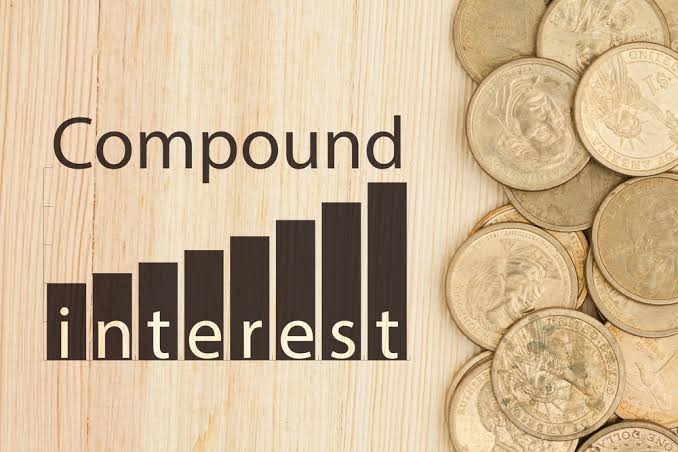
That is the principle behind compound interest: your original savings earn interest, and interest left in the account can earn additional interest.
For Kenyan savers considering a money market fund, the opportunity is straightforward. But understanding the investment’s terms—including its minimum deposit, costs and withdrawal process—is just as important as comparing advertised yields.
How compound interest works
With simple interest, earnings are calculated on the original principal. With compound interest, retained earnings become part of the balance used to calculate future returns.
Consider a hypothetical KES 10,000 investment earning a constant 10% annually, compounded once a year.
| Time invested | Balance at year-end | Interest earned that year |
|---|---|---|
| Starting balance | KES 10,000 | — |
| Year 1 | KES 11,000 | KES 1,000 |
| Year 2 | KES 12,100 | KES 1,100 |
| Year 3 | KES 13,310 | KES 1,210 |
The second year earns more because the calculation includes the first year’s interest.
This illustration assumes no withdrawals, additional contributions, fees or taxes. The 10% rate is an example, not a forecast or promised investment return.
Regular top-ups can increase the balance further, although part of that growth comes from your own contributions rather than investment earnings.
What Ronald Read’s story illustrates
Ronald Read, an American service-station worker and janitor, became widely known after his death for the wealth he had quietly accumulated.
He left major gifts to his local hospital and library, including $4.8 million to Brattleboro Memorial Hospital and $1.2 million to Brooks Memorial Library. ctinsider.com
His experience illustrates the potential value of frugality, long-term investing and patience. However, a stock portfolio’s growth should not be described as guaranteed compound interest. Shares can generate dividends and capital gains, but their prices can also fall.
The useful lesson is consistency—not an expectation that every saver will achieve the same outcome.
I&M Capital Wealth Fund: What the published terms say
I&M describes its Capital Wealth Fund as a low-risk, Kenya-shilling money market fund investing in short-term fixed-income securities.
Its published product information specifies:
| Feature | Published terms |
|---|---|
| Minimum initial investment | KES 5,000 |
| Minimum additional contribution | KES 2,000 |
| Minimum withdrawal | KES 2,000 |
| Earnings calculation | Daily |
| Compounding | Monthly |
| Withdrawal processing | Within three working days |
| Withdrawal charge | None stated on the product page |
| Interest on withdrawal | No loss of earned interest |
KES 2,000 is the published minimum top-up, not the minimum opening investment. This differs from the starting amount stated in the supplied promotional copy. I&M Bank Kenya
Another official I&M investment page lists a 14-day initial lock-in period. Prospective investors should confirm the applicable opening and withdrawal conditions before transferring money. imbankgroup.com
Low risk does not mean guaranteed capital
A fund’s aim to preserve capital should not be confused with an unconditional guarantee that its balance cannot fall.
Likewise, a quoted yield should not be presented as a permanent return. Investors should establish whether the figure is annualised, whether it reflects management fees and whether withholding tax still applies.
The absence of withdrawal charges also does not establish that an investment has no costs. Management expenses and other applicable deductions can affect the amount ultimately retained.
Make contributions sustainable
Compounding works best when earnings remain invested, but that does not mean all available cash should be locked away.
Keep money for immediate expenses accessible, especially where an investment takes several working days to process withdrawals. Then choose a contribution amount that fits your budget and can continue through less comfortable months.
Before investing, confirm the latest yield, complete fee schedule, tax treatment and withdrawal conditions. The most useful savings habit is one you can maintain—and an investment whose terms you understand.