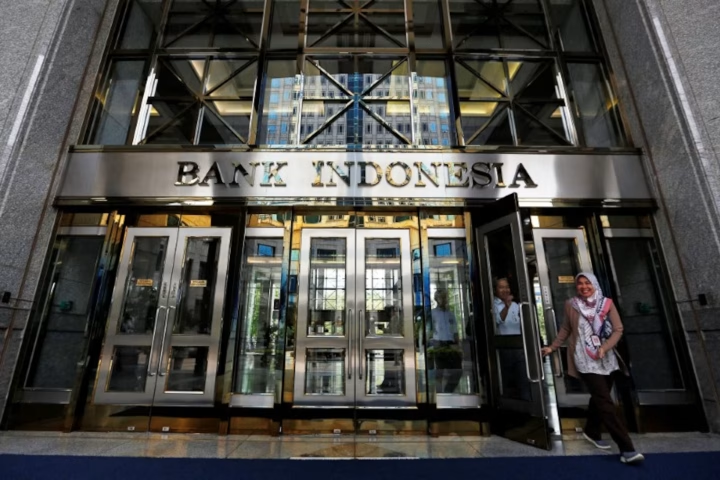
In today’s uncertain economy, choosing a secure financial institution is more important than ever. Whether you’re an investor, expat, or business owner, you need a bank you can trust. Based on global credit ratings, capital strength, and reputation, here are the top 10 safest banks in the world for 2025.
These banks consistently rank high in Moody’s, S&P, and Fitch credit ratings and offer outstanding customer protection and compliance practices.
1. KfW (Germany)
Why it’s safe:
KfW, Germany’s state-owned development bank, has one of the strongest credit ratings worldwide. Backed by the German government, it operates with virtually no credit risk.
- Credit Rating: AAA (Moody’s, S&P, Fitch)
- Country Stability: Very High
- Deposit Insurance: Full government backing
2. Zürcher Kantonalbank (Switzerland)
Why it’s safe:
This Swiss cantonal bank enjoys full backing from the Canton of Zurich. It offers conservative banking with minimal risk exposure.
- Credit Rating: AAA
- Ownership: Government-owned
- Deposit Protection: Swiss government guarantee
3. Bank Nederlandse Gemeenten (Netherlands)
Why it’s safe:
BNG Bank specializes in funding Dutch public authorities, making it one of the lowest-risk financial institutions in Europe.
- Credit Rating: AAA
- Focus: Public sector financing
- Risk Profile: Extremely low
4. Landesbank Baden-Württemberg (Germany)
Why it’s safe:
As Germany’s largest state-backed bank, LBBW enjoys public ownership, strong oversight, and a cautious lending approach.
- Credit Rating: AA+
- Coverage: Corporate and municipal banking
- Stability: High, due to state guarantees
5. DBS Bank (Singapore)
Why it’s safe:
DBS is Asia’s most respected bank. Based in the highly regulated Singaporean financial system, it is known for digital innovation and solid risk management.
- Credit Rating: Aa1 (Moody’s), AA- (S&P)
- Digital Leadership: Top-ranked for cybersecurity and fintech
- Government Oversight: Strong
6. Royal Bank of Canada (Canada)
Why it’s safe:
RBC is Canada’s largest bank and operates under one of the strictest regulatory environments in the world.
- Credit Rating: AA (S&P), Aa1 (Moody’s)
- Assets: Over $1.7 trillion CAD
- Global Presence: North America, Europe, and Asia
7. TD Bank Group (Canada)
Why it’s safe:
Toronto-Dominion Bank is known for stability, low default rates, and a cautious lending strategy.
- Credit Rating: AA (S&P)
- Notable Strength: U.S. and Canadian retail banking dominance
- Deposit Insurance: CDIC (Canada) and FDIC (U.S. branches)
8. Norwegian Government Pension Fund via Norges Bank (Norway)
Why it’s safe:
While not a retail bank, Norges Bank manages the world’s largest sovereign wealth fund. Its operational arm is exceptionally stable.
- Credit Rating: AAA
- Ownership: 100% Norwegian government
- Reputation: Trusted globally for responsible investing
9. BNP Paribas (France)
Why it’s safe:
As one of Europe’s largest and most diversified banks, BNP Paribas combines retail strength with strong compliance.
- Credit Rating: A+ (S&P), Aa3 (Moody’s)
- Capital Reserves: Strong Tier 1 ratio
- Regulatory Oversight: European Central Bank
10. Mitsubishi UFJ Financial Group (Japan)
Why it’s safe:
MUFG is Japan’s largest bank and among the most secure in Asia, with a conservative investment philosophy and global footprint.
- Credit Rating: A1 (Moody’s), A (S&P)
- Assets: Over $3 trillion
- Reach: Americas, Asia, and Europe
What Makes a Bank “Safe”?
The safest banks typically meet the following criteria:
- High credit ratings from major agencies
- Low risk exposure to bad debt or high-risk investments
- Strong capital buffers (Tier 1 ratio)
- Government support or ownership
- Regulatory oversight in financially stable countries
When choosing a bank, always consider not just interest rates, but also the institution’s long-term security.
In 2025, financial trust is everything. These ten institutions represent the gold standard in safe global banking. Whether you’re saving for the future or managing international assets, choosing a bank with solid credit and a clean history is the smartest step forward.