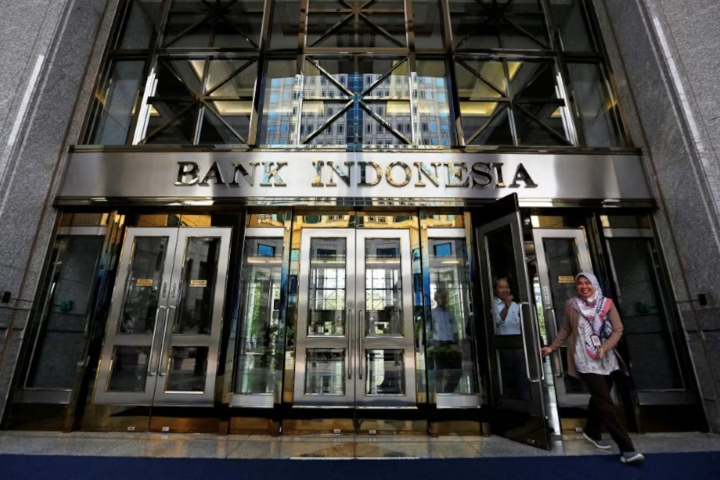
The rise of Islamic banks in Uganda marks a turning point in the country’s financial system. Sharia-compliant finance blends faith-based principles with Uganda’s drive to improve financial inclusion. Conventional banks still dominate, but Islamic institutions now give Ugandans the chance to access interest-free and ethical banking services.
Uganda opened the door to Islamic banking with amendments to the Financial Institutions Act in 2016. Further regulations followed in 2018. Early growth stalled as regulators debated who should supervise Sharia compliance. In 2023, Parliament resolved the issue, letting banks appoint their own Sharia boards. This decision cleared the way for actual operations.
Salaam Bank became the first fully licensed Islamic bank in Uganda. The institution emerged after Top Finance Bank was acquired and converted into a Sharia-compliant bank. In 2023, the Bank of Uganda granted it a license. Salaam Bank now provides accounts, business services, and financing products that rely on profit-sharing instead of interest.
Even before Salaam Bank, Islamic principles appeared in microfinance. Local institutions introduced interest-free loan products for rural communities. These efforts proved that Ugandans, including non-Muslims, had an appetite for alternatives to conventional lending.
The opportunities for Islamic banks in Uganda are substantial. About 14 percent of the population is Muslim, offering a ready market. Many non-Muslims also value fairness, transparency, and risk-sharing. These features give Islamic banks the potential to attract both local clients and foreign investors. Investment could flow into agriculture, housing, and infrastructure projects.
Challenges remain. Public awareness of Islamic banking is still limited, and many people misunderstand its principles. Without a central oversight body, ensuring consistent Sharia compliance across institutions can be difficult. Uganda also lacks enough trained professionals in Islamic finance. Banks must show that Islamic products serve all Ugandans, not just one faith group.
To succeed, banks must invest in education and outreach. Public campaigns can explain how Sharia-compliant finance works and what benefits it offers. Building strong governance and reliable Sharia advisory boards will strengthen credibility. Partnerships with conventional banks through Islamic “windows” could also extend access where full Islamic banks are not yet present.
In conclusion, Islamic banks in Uganda represent a promising change in the financial landscape. Salaam Bank’s license shows that reform can deliver results. With more awareness, skilled staff, and transparent practices, Islamic banking can promote inclusion and attract investment across the country.